
What if the most important part of a Zipscreen installation happens before you unpack a single component? Accurate measurements, a suitable fixing surface and a clear understanding of the opening can help prevent avoidable complications on site. This zipscreen installation guide for trade sets out a practical workflow for preparing, fitting and checking a system before handing it over to your customer.
Check each job against its actual site conditions. Access, exposure and the condition of the fixing surface can all affect what you need to confirm before ordering or starting work. Zipscreen configurations may have specific requirements, so don’t rely on assumptions or a previous installation as your only reference. Check the current manufacturer documentation for the system supplied. The official installation manual is version 5.4, published in January 2025, but confirm that it applies to your configuration.
Use the steps ahead to organise pre-installation checks, follow system-specific fitting instructions, test operation and leave the customer with clear guidance. Kamaco Blinds is an Australian-made and owned manufacturer and wholesaler supplying Zipscreen™ to retailers. Installation remains the responsibility of the trade professional.
Key Takeaways
- Use a consistent pre-fit sequence to compare the job order with the site and identify details to confirm before fitting.
- This zipscreen installation guide for trade explains how to assess the opening and fixing surface without assuming one mounting approach suits every job.
- Use measurement points, allowances and tolerances specified in the current instructions for the supplied Zipscreen™ configuration.
- Finish with an operational check, clear customer guidance and a job record that reflects the product documentation.
Before fitting a Zipscreen: assess the Brisbane site and installation scope
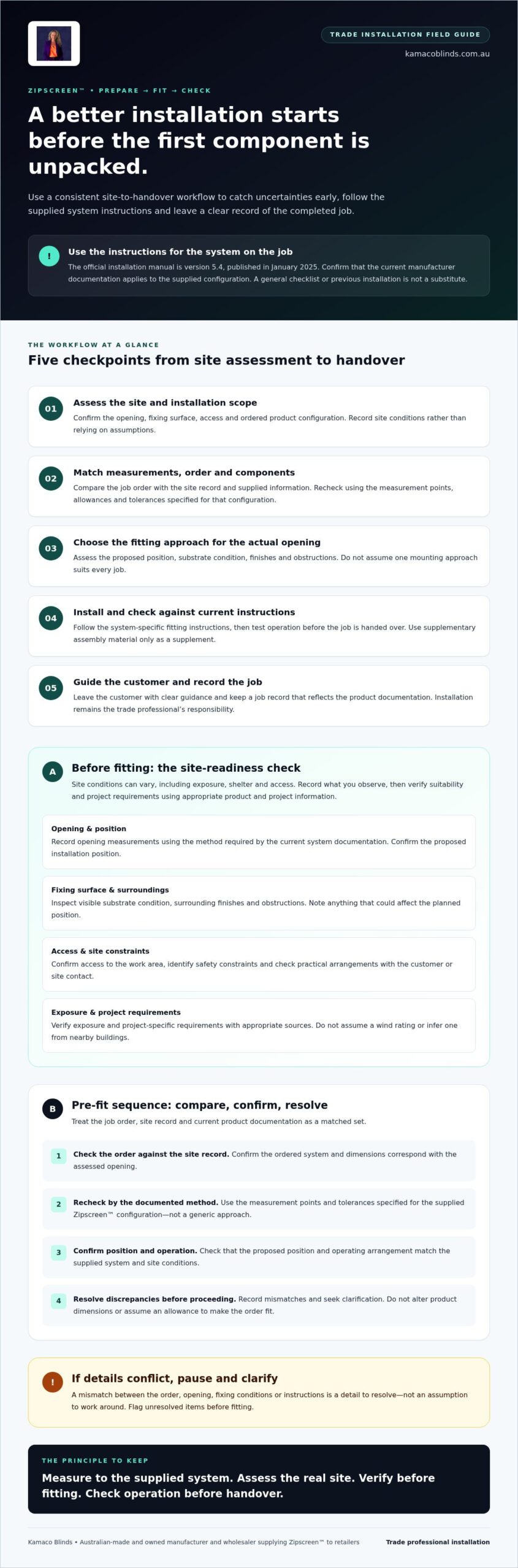
Before fitting begins, confirm the opening, fixing surface, access and ordered product configuration. A useful zipscreen installation guide for trade starts with this site assessment, but a general checklist can’t replace the measurements, allowances and tolerances in the current Zipscreen™ documentation.
Brisbane sites can differ in exposure, shelter and access, even within the same suburb. Record what you observe, then verify the configuration’s suitability and any project-specific requirements against the relevant product documentation and project information. Don’t assume a wind rating or infer one from nearby buildings. For broader context on the product category, Wikipedia provides an overview of awning systems, but use the manufacturer’s instructions for installation decisions.
For a visual assembly overview, watch this Zipscreen video from Rollease Acmeda. Treat it as supplementary material, not a replacement for the instructions supplied for the system on your job.
What should a trade installer inspect before a Zipscreen job?
Use the product-specific measuring method to record the opening. Don’t rely on a general site survey or assume clearances. Inspect the proposed fixing surface and surrounding finishes for visible condition and obstructions, and note anything that could affect the planned position. Confirm access to the work area, identify site safety constraints and check practical arrangements with the customer or site contact.
- Record opening measurements as required by the current system documentation.
- Note substrate condition, finishes, obstructions and proposed installation position.
- Confirm access, work area safety and relevant site constraints.
Which site details need product or project confirmation?
Compare the job order with the supplied documentation. Check the system, operation type, components and configuration. Then confirm that the opening and fixing conditions align with the instructions, and verify exposure and project requirements with appropriate sources. If details conflict, stop and seek clarification before proceeding. Resolving uncertainty early keeps the fitting plan aligned with the product supplied.
Pre-installation check: record the opening, assess the substrate and position, review access, check the ordered configuration, and verify exposure and project requirements. Flag anything unresolved before fitting rather than treating an uncertain site condition as acceptable.
Prepare Zipscreen measurements, components and tools before fitting
A tidy preparation process helps catch order or site discrepancies before they become fitting problems. In this zipscreen installation guide for trade, treat the job order, site record and current product documentation as a matched set. Measurement points, allowances and tolerances depend on the supplied system, so don’t apply a rule of thumb from another configuration.
How should installers verify the opening and order?
Work through this pre-fit sequence before installation:
- Check the job order against the site record. Confirm the ordered system and dimensions correspond with the opening assessed on site.
- Recheck measurements using the documented method. Use the measurement points and tolerances specified for this Zipscreen™ configuration, not a generic measuring approach.
- Confirm the mounting position and operation. Check that the proposed position and operating arrangement match the supplied system and site conditions.
- Resolve discrepancies before proceeding. Record any mismatch between the order, opening or instructions, and seek clarification. Don’t alter product dimensions or assume an allowance to make the order fit.
How can a trade installer organise components and tools?
Before opening or removing packaging, compare order labels and supplied information with the job details. Check the components against the order and current installation documentation, following any handling guidance provided. If something appears missing, damaged or inconsistent, pause and clarify before starting assembly.
Choose tools and fixings only after confirming the substrate and the product’s approved requirements. There isn’t a reliable universal tool list for every opening: the surface, access conditions and system configuration can change what’s appropriate. Keep verified components protected and organised, with the relevant instructions accessible, to reduce handling damage and avoid interruptions while fitting.
Preparation is also a good time to check that everyone involved understands their responsibilities and the sequence of work. The Australian Government’s national installation competency standards provide a reference for the broader professional process, including planning and customer handover. They don’t replace the instructions supplied for a particular system.
- Order: product and dimensions checked against the job.
- Site: measurements confirmed using current system documentation.
- Components: supplied items checked and any discrepancy recorded.
- Tools and fixings: selected to suit the confirmed substrate and product requirements.
For trade customers preparing a Zipscreen order, Kamaco Blinds’ trade product information can help clarify product details to confirm before work begins. Kamaco supplies products to retailers. Installation decisions and work remain with the trade professional.
Choose the Zipscreen fitting approach for the opening and fixing surface
Once you’ve checked the order and site details, assess how the opening, mounting position and supplied configuration work together. These details are related but not interchangeable. An opening measurement describes the space, while the mounting position and product configuration determine what the installation plan needs to accommodate. This part of a zipscreen installation guide for trade provides a decision framework, not a substitute for current system instructions.
How do opening and substrate conditions affect the installation plan?
Inspect the fixing surface separately from the opening. Look for changes in finish, visible damage, uneven areas and architectural features that could affect positioning or access. A surface that looks sound isn’t, by appearance alone, confirmation that it’s suitable for the supplied system. If suitability is uncertain, check the product requirements and seek advice rather than relying on a generic fixing recommendation.
Plan the work sequence around practical constraints. A nearby fitting, narrow access route or delicate surrounding finish may affect how components can be brought into position and handled. Confirm product-specific dimensions, fixings and operating clearances in the current instructions before deciding the final approach.
| Site factor | What to inspect | What to confirm |
|---|---|---|
| Opening and proposed position | Opening shape, mounting area and nearby architectural features. | Documented measuring method, configuration and required operating clearances. |
| Fixing surface | Visible condition, finish changes and whether the proposed fixing area is consistent. | Substrate suitability and approved fixings for this system and site. |
| Access and obstructions | Room to handle components, access route and items that could interrupt fitting. | Whether the planned sequence is compatible with the product instructions and site constraints. |
| Exposure and project conditions | Site-specific shelter, orientation and surrounding conditions. | Relevant environmental limits and project requirements from appropriate sources. |
What should installers verify for Brisbane site exposure?
Brisbane locations aren’t uniform. Exposure can vary with the individual site, its orientation, shelter and nearby structures, so don’t assume product suitability or a rating from the suburb alone. Check current product documentation for applicable limits and verify project-specific requirements with the relevant source. Record unresolved questions about exposure or fixing suitability, then clarify them before confirming the installation approach.
Decision point: proceed with planning only when the opening, mounting position, surface, access and configuration are understood and consistent with the instructions. If they don’t align, pause and resolve the discrepancy before fitting. This assessment keeps the installation plan grounded in both the actual site and the supplied product.
Install and check a Zipscreen using the current product instructions
A reliable fitting process follows the supplied system instructions, not an assumed generic sequence. The workflow below helps organise the job. It doesn’t replace the manufacturer’s instructions or provide configuration-specific fitting directions. Confirm that the documentation applies to the Zipscreen™ supplied. The official installation manual is version 5.4, published in January 2025, but check for the latest applicable instructions before work begins.
What is a sensible trade workflow during fitting?
Just before fitting, recheck the product configuration, installation position and instructions against the site. Keep the work area controlled, protect the product and surrounding finishes, and use only verified components and fixings that meet the documented requirements for the confirmed substrate.
- Review: Confirm the supplied configuration and current instructions match the job.
- Prepare: Keep the work area clear and protect components and nearby finishes.
- Fit: Follow the documented order and use approved components and appropriate verified fixings.
- Operate and inspect: Test the system as directed, then assess it against the product requirements.
This structure helps keep the work deliberate without implying that every installation uses the same mounting method or component sequence. If a part, site condition or instruction doesn’t match what you expected, stop and check before continuing.
How should installers test operation and resolve issues?
Once fitting is complete, operate the system as the supplied documentation directs. Check movement and alignment, and look for visible obstructions or anything inconsistent with the documented requirements. Assess secure fixing and operating clearances against the instructions rather than relying on feel or appearance alone.
If operation isn’t smooth, don’t force the system or modify components to conceal a fault. Recheck the relevant steps and site conditions, document what you observe, and contact the appropriate supplier or technical support if the concern remains unresolved. Keep the system out of handover until it operates as required and any outstanding issue has been addressed.
A clear record supports a useful handover. Note the configuration checked, instructions followed, operational result and any clarification received. The zipscreen installation guide for trade approach is straightforward: follow current product-specific instructions, verify each stage and pause whenever the installation departs from them.
For trade product information to help prepare for a Zipscreen job, contact Kamaco Blinds. Kamaco supplies products to retailers. Installation remains the responsibility of the trade professional.
Complete the Zipscreen handover and support the customer as a trade partner
A careful handover completes the job: the customer sees the system operate, understands the relevant controls and knows where to find product guidance. Treat handover as part of the installation workflow, not an afterthought. Follow the documentation supplied for the specific Zipscreen™ configuration so your explanation reflects the system actually fitted.
What belongs in a clear Zipscreen customer handover?
Demonstrate normal operation as directed in the product instructions, then invite the customer to try it. Explain the controls that apply to their system and point out any operating or care guidance in the supplied documentation. Avoid adding generic instructions that could conflict with product-specific information.
Before closing the job, record the key checks and leave the customer with relevant documents and a clear contact pathway for product questions. A concise record helps both parties remember what was completed and what, if anything, remains outstanding.
- Operational check: note that the system was operated and checked against its product requirements.
- Customer explanation: record that normal operation and relevant controls were demonstrated.
- Documentation: identify the instructions and care information provided.
- Open items: note unresolved concerns and any follow-up agreed with the customer.
If a concern remains, explain it plainly and agree on the next step rather than presenting the job as complete. The customer should know whom to contact, whether that’s the retailer or another appropriate product contact, based on the issue and information supplied.
How can retailers prepare for future Zipscreen trade jobs?
Keep current product instructions and order details accessible to the installation team. Check component or configuration questions with the supplier before scheduling work. A consistent record of the supplied system and its documentation can help the team prepare each job with fewer unanswered questions.
Kamaco Blinds is an Australian-made and owned manufacturer and wholesaler supplying Zipscreen™ to retailers. It’s a product supply partner, not an end-user installer, so installation and customer handover remain with the trade professional. For context on wholesale supply and working with a manufacturer, read Kamaco’s wholesale blinds guide.
Use this final stage of the zipscreen installation guide for trade to leave the customer with a checked system, accurate product guidance and a clear record. Retailers seeking wholesale product information can use the relevant trade channels to make an enquiry.
Make every Zipscreen job ready for a confident handover
A dependable installation starts by confirming the site and ordered configuration, then following the current product-specific instructions for measuring, fitting and checking operation. Pause if the opening, fixing surface or system behaviour doesn’t match the documentation. Finish by demonstrating normal operation, sharing relevant product guidance and recording any outstanding items.
This zipscreen installation guide for trade provides a workflow, not a substitute for manufacturer instructions. Careful checks and a clear customer handover help bring precision to the finished space and confidence to the job.
Kamaco Blinds is an Australian-made and owned manufacturer and wholesaler supplying retailers, with Zipscreen™ as its priority offering. Its products use Rollease Acmeda® components to support smooth, hassle-free operation. Kamaco supplies products to retailers; installation remains the trade professional’s responsibility. Explore Kamaco’s trade-supplied Zipscreen™ range for product information as you prepare future jobs.
With sound preparation and a considered handover, you’re well placed to deliver a polished result for your customer.
Frequently Asked Questions
How do you install a Zipscreen?
Install a Zipscreen by following the current instructions for the exact system supplied. A zipscreen installation guide for trade can help structure the job, but it doesn’t replace manufacturer documentation. Check the order and site conditions, prepare the opening, then fit the specified components and fixings in the documented sequence. Finish by checking operation and alignment against the product requirements. Stop if components, conditions or performance don’t match expectations.
What should a trade installer check before installing a Zipscreen?
Before fitting, compare the job order with the site and supplied product documentation. Confirm opening measurements using the system’s documented method, inspect the proposed fixing surface, and note obstructions, surrounding finishes and access constraints. Check the configuration and operating arrangement, then verify relevant site exposure or project requirements. If details conflict or the substrate’s suitability is unclear, record the issue and seek clarification before proceeding.
Can a Zipscreen be installed on any surface?
No. Don’t assume every surface is suitable. Assess the fixing surface for the particular opening and check it against the supplied system’s requirements. Visible condition alone may not establish whether a substrate can support the proposed installation. Confirm approved fixing requirements in current product documentation and seek appropriate clarification if the surface is uncertain, damaged or inconsistent. Avoid relying on a generic fixing recommendation or adapting the system to compensate.
How do you measure an opening for a Zipscreen?
Measure the opening using the points, method and tolerances specified in the current instructions for the exact Zipscreen configuration. Don’t apply assumed allowances or copy measurements from another system. Record the site measurements, compare them with the order and confirm the proposed mounting position and operation suit the supplied product. If the opening differs from the order or instructions, document the discrepancy and resolve it before fitting.
What should you check after installing a Zipscreen?
Operate the finished system as directed in its product documentation. Check movement, alignment, visible obstructions and secure fixing against the documented requirements, and confirm the controls work as intended. Don’t force the system or modify components to hide a problem. If something appears wrong, record the concern and contact the appropriate supplier or technical support before handover. Once checks are complete, demonstrate normal operation and provide the relevant product guidance.
Do Brisbane installers need to consider site exposure when fitting a Zipscreen?
Yes. Conditions vary between Brisbane sites, so assess the individual location rather than assuming exposure is the same across the city. Consider the site’s shelter, orientation and surrounding conditions, then check applicable product limits and project requirements in the relevant documentation or with an appropriate source. Don’t assume a wind rating. Record unresolved exposure or fixing questions and clarify them before confirming the installation approach.
Does Kamaco Blinds install Zipscreen for homeowners?
No. Kamaco Blinds is an Australian-made and owned manufacturer and wholesaler supplying Zipscreen™ and other blinds and awnings to retailers. It doesn’t provide end-user installation services or sell directly to the public. Installation is arranged by the retailer and completed by the trade professional responsible for the job. Homeowners should speak with their retailer about installation, product operation and the documentation supplied with their Zipscreen system.