The biggest misconception in the outdoor living industry is that Zipscreen and folding arm awnings are rivals for the same space. When you are comparing zipscreen vs folding arm awnings for retailers, it’s more helpful to view them as complementary tools for different architectural goals. You’ve likely seen the hesitation in a customer’s eyes when they’re faced with technical specifications or varying price points. It’s a common challenge for professionals to explain why one solution requires a structural beam while the other relies on side channels.
This guide will equip you with the expert knowledge needed to transform customer indecision into confident orders. We’ll explore how to match the right technology to the Australian climate, ensuring your recommendations prioritize both elegance and longevity. You will learn the fundamental distinction between creating an outdoor enclosure and a retractable extension, allowing you to provide the precise, high-end advice your clients expect.
Key Takeaways
- Understand the fundamental distinction between creating a sealed, insect-proof enclosure and providing expansive overhead shade without the need for permanent posts.
- Master the technical nuances of zipscreen vs folding arm awnings for retailers to accurately advise your clients on wind ratings and structural mounting requirements.
- Equip your team to identify the ideal solution based on specific lifestyle needs, such as vertical privacy for balconies or cantilevered extensions for open-air dining.
- Recognise the importance of premium hardware and Rollease Acmeda® components in delivering the durability and aesthetic polish your high-end customers demand.
- Learn how local Australian manufacturing and reliable wholesale partnerships can streamline your lead times and ensure consistent quality for every project.
Understanding the Core Differences: Zipscreen™ vs. Folding Arm Awnings
Success in the retail shade industry begins with a clear understanding of spatial geometry. While both systems offer the convenience of retractability, they address the Australian climate through entirely different engineering philosophies. The debate regarding zipscreen vs folding arm awnings for retailers is less about which product is superior and more about which lifestyle problem you are trying to solve. It’s a simple distinction between enclosing an existing structure and extending a new one. An awning serves as a versatile secondary covering, but the physical orientation of that cover changes the entire utility of the outdoor environment.
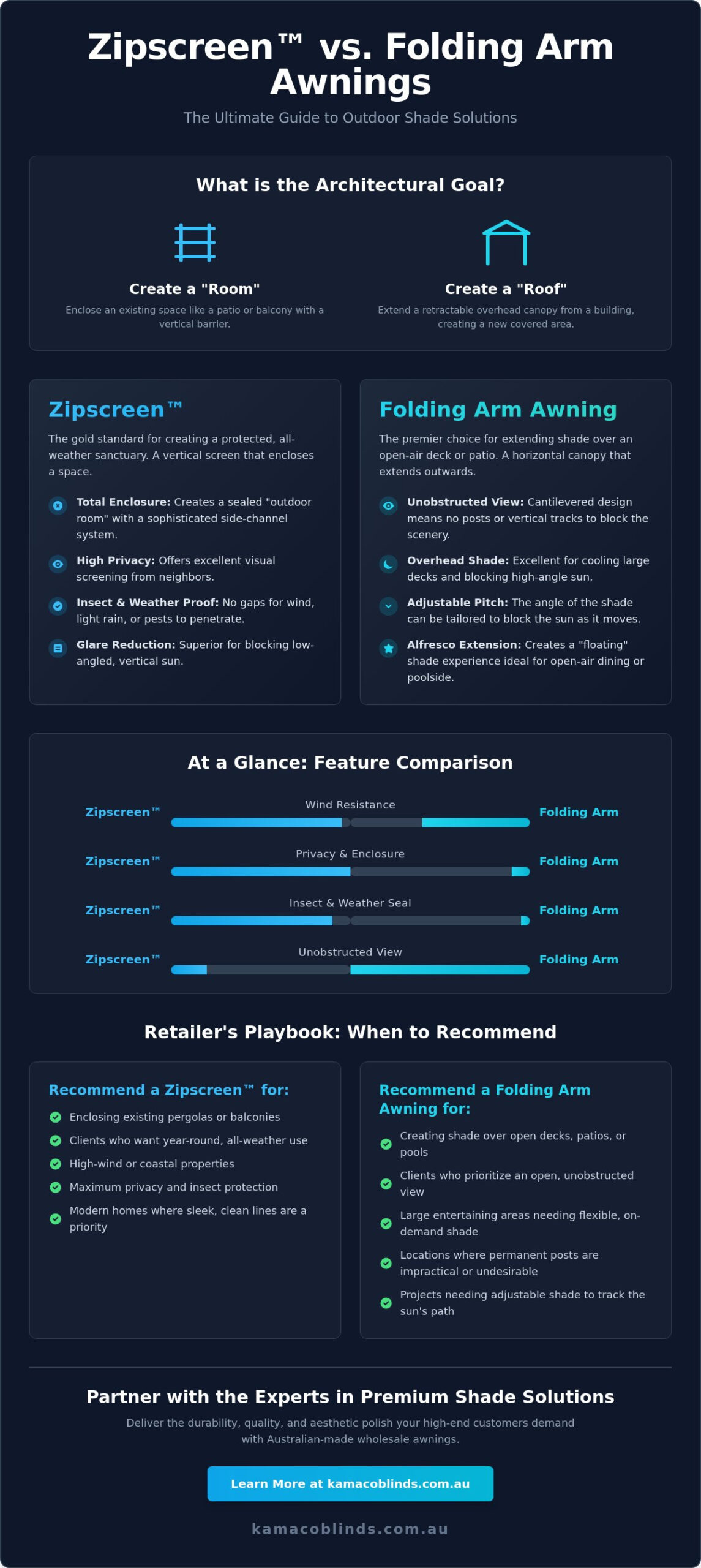
You can help your customers visualize this by asking a single question: do they want to create a room or a roof? A Zipscreen system is designed to wrap around a balcony or patio, creating a vertical barrier that feels like a permanent wall when deployed. Conversely, a folding arm awning reaches out horizontally from a building, providing a canopy that mimics a structural roofline without the need for permanent posts or heavy construction. Understanding this core difference allows you to guide the conversation toward the most functional outcome for their specific home layout.
The Zipscreen Advantage: Total Environment Control
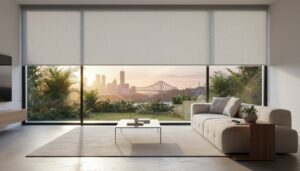
The Zipscreen™ is the gold standard for creating a protected, all-weather sanctuary. It uses a sophisticated side-channel system where the fabric is securely locked into the tracks. This design ensures there are no gaps for wind, rain, or insects to penetrate the space. It’s the ideal recommendation for clients with existing pergolas or balconies who want to enjoy their alfresco areas year-round. The aesthetic is incredibly sleek and minimalist, making it a favorite for modern Brisbane homes where clean lines are a priority. By choosing this solution, homeowners gain a sophisticated “outdoor room” that offers vertical glare reduction and a high degree of privacy from neighbors.
Folding Arm Awnings: The Ultimate Alfresco Extension
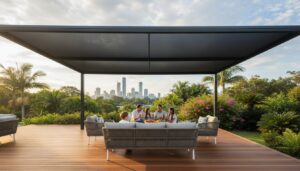
When a client wants to enjoy an open-air deck but lacks a permanent roof, the folding arm awning is the premier choice. These systems use heavy-duty retractable arms to support the fabric, allowing for a cantilevered design that leaves the view entirely unobstructed by vertical tracks or posts. They’re perfect for providing temporary overhead shade during the peak heat of the day. Because they offer an adjustable pitch, you can tailor the angle of the shade to block the sun as it moves across the horizon. This flexibility makes them a highly practical addition for poolside areas or large entertaining decks where a permanent structure might feel too imposing or permanent. When comparing zipscreen vs folding arm awnings for retailers, remember that the folding arm is the master of the “floating” shade experience.
Functional Comparison: Environmental Control for Your Clients
Environmental control is the primary driver for most shade purchases. When evaluating zipscreen vs folding arm awnings for retailers, the decision often hinges on how a customer wants to interact with the elements. Wind resistance is a major differentiator. Zipscreen technology utilizes a side-channel system that locks the fabric into place, making it an exceptionally stable choice for breezy balconies or coastal properties. Conversely, folding arm awnings are designed with flexibility in mind. Their retractable arms are engineered to withstand moderate winds, but they require a bit more caution during heavy gusts.
Effective shade solutions do more than just block the sun; they actively reduce solar heat gain by intercepting radiation before it reaches the building’s interior. Folding arm awnings excel at providing overhead protection, effectively cooling large decks and preventing the sun from baking the glass doors below. Zipscreens focus on vertical glare reduction. They’re the superior choice for low-angled afternoon sun that can make a living room uncomfortable. For retailers, explaining this distinction helps customers choose based on whether they need a horizontal canopy or a vertical shield.
Privacy is another area where these products diverge. A Zipscreen creates a secluded sanctuary, offering a high degree of visual screening while still allowing airflow. It’s essentially a splash-proof seal for an outdoor space, keeping light rain and mist at bay. Folding arm awnings maintain an open, airy connection with the garden. While they provide excellent water runoff when installed at the correct pitch, they don’t offer the same level of side-on protection from the rain as a vertical screen.
Performance in the Brisbane Climate
The intense Queensland sun demands high-performance materials. Vertical UV blocks are essential for managing the harsh afternoon glare that characterizes our local summers. However, our seasonal storms also play a role. For folding arm awnings, we recommend integrating wind sensors from the wholesale range at Kamaco Blinds. These sensors automatically retract the awning when wind speeds exceed safe limits, protecting the customer’s investment. The ‘shade factor’ serves as a critical metric for retail consultations, representing the percentage of light and heat blocked by a specific fabric weave.
Aesthetic and Space Considerations
Design-conscious clients will appreciate how a Zipscreen can practically “disappear” into a sleek headbox or pelmet when not in use. This minimalist approach suits modern architectural styles perfectly. Folding arm awnings have a more significant visual presence, as the cassette or fabric roll is often visible on the building’s facade. Choosing fabric colours that complement Australian outdoor living trends, such as muted charcoals or warm stones, can help these larger units blend seamlessly with the home’s exterior.
Technical Specs & Installation: What Your Trade Team Needs to Know
Professionalism in the shade industry relies on the invisible engineering within the hardware. When weighing up zipscreen vs folding arm awnings for retailers, your installation team must understand that the mechanical demands of each system vary significantly. A high-end finish isn’t just about the fabric; it’s about the precision of the components that allow the system to operate smoothly for years. Using Rollease Acmeda® components ensures that every installation meets a standard of excellence that protects your business from frequent maintenance call-backs. Quality hardware is the foundation of a retailer’s reputation in the Australian market.
Structural Integrity and Mounting
Folding arm awnings present a specific challenge due to their cantilevered design. Because they extend without vertical supports, they exert a significant pull on the mounting surface. Your trade team must assess wall strength carefully, often requiring specialised brackets or structural reinforcement for timber-frame homes. In contrast, Zipscreen installations focus on the precision of the vertical side-channels. If these tracks aren’t perfectly level, the fabric can bunch or fail to track correctly, compromising the sleek look. For unique architectural layouts, utilising cut skin services ensures that custom fabric dimensions are factory-precise, reducing the risk of onsite errors and ensuring a perfect fit every time.
Motorisation and Smart Home Connectivity
The demand for automation is rapidly increasing across Queensland. There’s a clear shift toward smart home motorised blinds in Brisbane wholesale, where clients expect to control their outdoor environment via a smartphone or voice command. Integrating Automate™ motorised systems into your sales process doesn’t just add a premium lifestyle feature; it also provides essential protection for the product. For instance, upselling wind and sun sensors for folding arm awnings is a practical way to prevent damage during sudden storms. Research into the Energy Performance of Awnings shows that automated systems can optimise solar heat gain reduction by reacting to real-time weather conditions. This technical edge allows you to position your retail business as a knowledgeable partner in home efficiency.
Choosing high-grade hardware is a strategic move for your brand’s longevity. When comparing zipscreen vs folding arm awnings for retailers, the maintenance cycle of a product is often determined by the quality of its internal springs and motor torque. Reliable systems from Kamaco Blinds mean fewer service requests and more satisfied clients who will recommend your services to others. By focusing on these technical details, your team can ensure that every installation is as functional as it is beautiful, providing a seamless experience for the end-user.
The Retailer’s Playbook: When to Recommend Which Shade Solution
Your role as a consultant is to act as a bridge between a lifestyle friction point and a technical solution. When comparing zipscreen vs folding arm awnings for retailers, the most effective strategy is to map the product’s core function to the specific environmental challenges your customer faces. It isn’t just about shade; it’s about how they intend to inhabit their outdoor space. By categorising recommendations into clear scenarios, you can reduce customer indecision and streamline the path to a final selection.
- Scenario A: The Privacy Seeker. If a client has a compact balcony or a patio overlooked by neighbours, recommend a Zipscreen. Its vertical drop and side-channel system create a secluded sanctuary that feels like a natural extension of the indoor living area.
- Scenario B: The Alfresco Entertainer. For clients who want to dine on a deck that lacks a permanent roof, a folding arm awning is the premier choice. It provides a generous overhead canopy that protects the table and guests without the need for obstructive posts.
- Scenario C: The Evening Retreat. When a customer mentions that mosquitoes or midges prevent them from using their outdoor area at night, the Zipscreen is the only viable answer. The sealed edges provide a genuine insect-proof enclosure that traditional awnings simply cannot match.
- Scenario D: The Minimalist. If the client values an unobstructed view and only needs shade during peak heat, suggest a folding arm awning. It can be tucked away entirely into a sleek cassette, leaving the building facade clean and open when not in use.
Identifying Client Pain Points
Success begins with asking the right questions. Instead of leading with price, ask whether wind, sun, or insects are their primary concern. This consultative approach allows you to explain the long-term ROI of a premium custom shutter or awning. Use showroom samples to let them feel the tension in the Zipscreen tracks or the robust weight of the folding arms. This tactile experience often justifies the investment in high-end hardware over budget alternatives.
Maximising Margins and Sales Success
Positioning a Zipscreen as a high-value “outdoor room” renovation rather than a simple window covering can significantly shift the customer’s perception of value. To protect your margins and ensure customer satisfaction, make motorisation a standard part of your recommendation. It’s much easier to upsell the convenience of an automated system during the initial consultation than to retro-fit it later. By leveraging the quality of Australian-made production, you provide a narrative of reliability and local accountability that resonates with the modern homeowner. To see how these premium systems can integrate into your current catalogue, you can partner with a dedicated wholesale manufacturer today.
Kamaco Blinds: Your Brisbane Partner for Premium Wholesale Awnings
Choosing between zipscreen vs folding arm awnings for retailers is only the first step in providing a high-end service. The second, and perhaps most critical step, is securing a supply chain that mirrors your commitment to excellence. At Kamaco Blinds, we’ve built our identity on the foundation of Australian craftsmanship. We aren’t just a vendor; we’re a dedicated partner invested in the long-term success of your retail business. By choosing a wholesale blinds manufacturer in Australia, you gain more than just a product. You gain the peace of mind that comes with local accountability and superior lead times.
Our facility provides full access to the most respected names in the industry, including the complete Zipscreen™ range and Veue Drop Awnings. We understand that your clients expect a seamless experience, from the initial consultation to the final reveal of their transformed outdoor space. This is why we’ve streamlined our ordering processes to be as intuitive as possible, allowing you to focus on what you do best: growing your business and satisfying your customers. Every order is handled with the meticulous attention to detail that your high-end projects demand.
Local Manufacturing, Global Standards
Operating out of Brisbane gives us a unique perspective on the regional climate and lifestyle. We don’t just manufacture blinds; we engineer solutions that withstand the intense Queensland sun and seasonal storms discussed in previous sections. This local presence ensures total consistency in every custom-made order. Your installation teams will benefit from our direct technical support and training, ensuring they’re equipped to handle the structural nuances of heavy-duty awnings or the precision requirements of Zipscreen tracks. When you work with us, you’re tapping into a wealth of expertise that’s just a phone call away.
Become a Kamaco Retail Partner
We believe that a successful partnership is built on transparency and mutual growth. As a Kamaco retail partner, you’ll receive exclusive access to our digital ordering portal and competitive wholesale pricing. This system is designed to reduce administrative friction, giving you real-time updates on your orders and helping you manage customer expectations with ease. We’re committed to supporting your business through reliable supply chains that don’t falter when demand peaks. If you’re ready to elevate your offering and provide your clients with the very best in Australian-made shade solutions, Contact Kamaco Blinds to discuss your wholesale requirements today.
Elevating Your Retail Offering with Precision Shade Solutions
Navigating the choice between zipscreen vs folding arm awnings for retailers becomes a significant competitive advantage when you lead with a consultative approach. By identifying whether a client needs the sealed protection of an outdoor room or the expansive reach of a horizontal canopy, you ensure a result that is both functional and aesthetically pleasing. Success in this industry relies on the intersection of design expertise and engineering reliability, ensuring that every installation enhances the homeowner’s lifestyle for years to come.
Partnering with a dedicated manufacturer is the final piece of the puzzle. At Kamaco Blinds, we take pride in our Australian-made and owned identity, utilising premium Rollease Acmeda® components to guarantee longevity. Our Brisbane-based manufacturing ensures fast lead times and local accountability that you can pass directly to your customers. It’s about building a reputation for quality that speaks for itself, backed by a team that understands the specific demands of our regional climate.
We invite you to take the next step in your business journey. Register as a Kamaco Retailer and Access Wholesale Pricing to start providing your clients with the finest shade solutions in the region. Let’s work together to transform more Australian outdoor spaces with precision and style.
Frequently Asked Questions
Can Zipscreen be installed on a folding arm awning?
Zipscreen cannot be installed directly onto a folding arm awning because they are two fundamentally different structural systems. A Zipscreen requires vertical side channels and a fixed frame to secure the fabric, whereas a folding arm awning is a cantilevered extension designed to reach out horizontally from a wall. You can, however, install both systems in the same outdoor area to provide a combination of vertical privacy and overhead shade.
What is the maximum wind rating for a Zipscreen compared to a folding arm?
When comparing zipscreen vs folding arm awnings for retailers, the wind rating is a critical safety distinction. Zipscreen systems are generally rated for much higher wind speeds because the fabric is securely locked into side tracks, which prevents it from flapping or pulling out. Folding arm awnings are more susceptible to wind gusts and should be retracted when speeds exceed 30 to 50 km/h, depending on the specific model and arm strength.
Are folding arm awnings waterproof or just water-resistant?
Most folding arm awnings are water-resistant rather than fully waterproof. They’re designed to shed light rain when installed at a sufficient pitch, but heavy downpours can cause water to pool on the fabric, which puts unnecessary strain on the arms. For clients seeking a splash-proof enclosure, the Zipscreen is a more appropriate recommendation as it creates a tighter seal against vertical rain and mist.
How do I choose between manual and motorised options for my retail clients?
The choice between manual and motorised options usually depends on the size of the installation and the client’s physical comfort. Manual operation is a cost-effective choice for smaller units, but motorisation is the gold standard for large folding arm awnings or hard-to-reach Zipscreens. Motorised systems also allow for the integration of Automate™ wind and sun sensors, which provide essential protection for the hardware during sudden weather changes.
What structural support is needed for a 7-metre folding arm awning?
A 7-metre folding arm awning requires significant structural support due to the immense weight and leverage it exerts on the building facade. Your trade team must ensure the mounting surface consists of structural timber or solid masonry rather than just decorative cladding. In many cases, custom spreader brackets are necessary to distribute the load across multiple fixing points, ensuring the unit remains stable when fully extended.
Can Zipscreen completely block out insects?
Zipscreen is exceptionally effective at blocking out insects because it utilises a unique side-channel technology that leaves no gaps for pests to enter. When the screen is fully deployed, it creates a sealed environment that keeps mosquitoes and midges at bay. This makes it a perfect solution for retailers whose clients want to enjoy their alfresco areas during the evening without the annoyance of bugs.
What are the most popular fabric choices for outdoor awnings in Brisbane?
Neutral and earthy colour palettes, such as charcoal, soft grey, and warm stone, are currently the most popular choices in the Brisbane market. These tones complement modern architectural finishes while providing excellent glare reduction. We recommend high-performance mesh fabrics that offer superior UV protection, ensuring the installation remains functional and beautiful despite the intense Queensland sun.
How long is the warranty on Rollease Acmeda components used by Kamaco?
Rollease Acmeda components are backed by a comprehensive manufacturer’s warranty that reflects their high engineering standards and suitability for the Australian climate. While specific terms can vary based on the component type and application, these parts are designed for long-term reliability. You can find the most accurate and up-to-date coverage details for your clients by checking the specific warranty documentation provided in your Kamaco retail partner portal.