
The right window covering is the one that suits the room, the opening and the way you use the space. For wholesale blinds in Aspley, compare interior blind options with curtains and shutters, then weigh product quality and the terms of any guarantee before deciding. Measurements and the intended level of light control help shape the choice.
It’s natural to focus first on colour and finish, since window coverings shape a room’s feel. Material quality and smooth operation matter just as much: they influence how a product works in daily life and how it looks over time.
This guide explains what to consider when sourcing wholesale blinds in Aspley, how blinds compare with curtains and shutters, and what to look for in product quality and guarantee information. You’ll also learn how a wholesale supplier fits into the process, from choosing suitable blind types to planning project details.
Key Takeaways
- Match the window covering to the room, opening and desired light control when weighing blinds against curtains and shutters.
- Consider how materials, components and day-to-day operation affect product quality, and read guarantee terms carefully.
- Understand how project details, including window measurements and the type of covering, shape a wholesale supply enquiry.
- Know what to look for when comparing wholesale supply options serving Aspley and Brisbane.
- Explore Roller Blinds, Vertical Blinds, Zipscreen™ and Veue Drop Awnings as options for different window and outdoor-covering needs.
Interior blinds, curtains and shutters
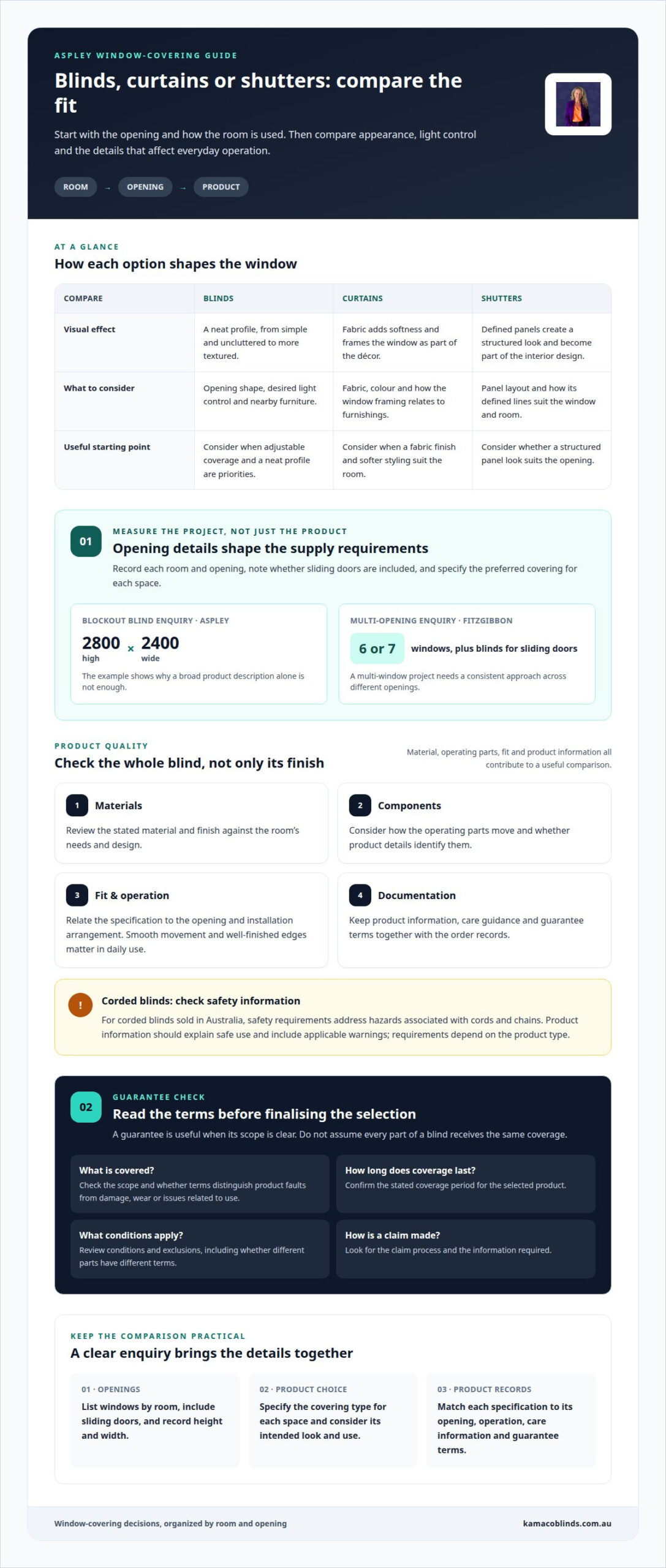
Choosing between blinds, curtains and shutters starts with the opening and its purpose. A bedroom may call for light control, while a living area may prioritise a clean, coordinated finish. Each option affects how the window looks and the room functions. When sourcing wholesale blinds in Aspley, start by matching the product category to the room’s daily use, then consider dimensions, appearance and operation together.
Blinds suit openings where a neat profile and adjustable coverage are priorities. Different designs create different visual effects, from a simple, uncluttered window to a more textured finish. Curtains add fabric and softness, framing a window as part of the room’s décor. Shutters create a structured appearance, with distinct panels that become part of the interior design.
A practical comparison can focus on these considerations:
- Blinds: Consider the opening shape, desired light control and how the blind will sit alongside nearby furniture.
- Curtains: Consider how fabric, colour and the way curtains frame the window will relate to furnishings.
- Shutters: Consider the panel layout and how its defined lines will suit the window and surrounding interior.
Measurements influence the choice as well as the final fit. An Aspley enquiry requested blockout blinds measuring 2800 high by 2400 wide. That example shows why a broad product description alone isn’t enough: the opening’s height and width help define the supply requirements. A separate enquiry from Fitzgibbon involved 6 or 7 windows, plus blinds for sliding doors. A multi-window project needs a consistent approach across different openings.
For a wholesale supply enquiry, organise project details by room and opening. Record which windows need coverage, whether sliding doors are included, and the preferred product category for each space. Then consider how each option suits the intended look and use. For example, a homeowner may want a restrained finish in one room and softer fabric styling in another. Different choices can still feel cohesive when colour and overall design work together.
It also helps to separate the product choice from broader room design preferences. Curtains and shutters may suit a project, but a blind enquiry should specify the blind type and each opening involved. Clear details help the supplier understand the scope and discuss suitable options. In Aspley, matching products across windows, doors and rooms creates a more considered result than choosing one style without regard to the openings.
Product quality and guarantees
Quality involves more than the fabric or finish visible at the window. A blind’s operating parts, construction and fit all affect everyday use. Smooth movement and well-finished edges contribute to a polished appearance, while suitable components support reliable operation. Assess the complete product, not just its colour or price category.
For corded blinds sold in Australia, safety requirements address hazards associated with cords and chains. Product information should explain safe use and include applicable warnings. Requirements depend on the product type, so documentation is an important part of assessing a corded design.
Use a consistent approach when comparing product quality. Consider the fabric or material, operating mechanism, finish and information supplied with the product. For example, assess a blind intended for frequent daily adjustment for comfortable operation as well as appearance. Ask how its construction suits the intended opening and use.
- Materials: Review the stated material and finish against the room’s needs and design.
- Components: Consider how the operating parts move and whether product details identify them.
- Fit: Relate the product specification to the opening and the proposed installation arrangement.
- Documentation: Keep product information, care guidance and guarantee terms together.
A guarantee is useful only when its scope is clear. Read what it covers, how long coverage lasts, and which conditions or exclusions apply. Check whether the terms distinguish product faults from damage, wear or issues related to use. The guarantee should also explain how to make a claim and what information is required. Don’t assume every part of a blind receives the same coverage.
For a wholesale project, organise these details before finalising product selection. Match each product specification to its opening, intended operation and documentation. If the project includes several rooms, group the relevant product details by location. This makes it easier to see which terms apply to each selected product, rather than relying on a general description for the whole order.
Good documentation connects product quality with practical expectations. Keep the product description, care information and guarantee terms with the order records. If a product uses named components, those details can help identify what was supplied. For example, a specification that distinguishes the blind material from its operating components is more useful than a broad label alone.
For a closer look at blind product components, consider how construction and operation fit the project’s requirements.
Wholesale window blinds
Wholesale supply involves product selection, project details and fulfilment. For an Aspley order, clarify the blind type, opening dimensions, intended buyer and delivery arrangements.
Suppliers Serving Aspley
Suppliers serving Aspley may be manufacturers, wholesalers or trade distributors. Their role affects how an order is specified and supplied. A manufacturer may coordinate production, while a distributor may manage access to product ranges and fulfilment. Identify the supplier’s role, then establish whether its purchasing channel suits your project.
Wholesale blind supply is generally trade-focused, serving retailers and building professionals. Homeowner access depends on the supplier’s sales model, so wholesale availability doesn’t necessarily mean direct public sales. For builders, key considerations include consistent product specifications across rooms and delivery coordination with the project schedule.
Wholesale Sources Near Aspley
To source wholesale blinds near Aspley, focus on suppliers whose delivery arrangements cover the suburb. A supplier may dispatch from a warehouse or arrange delivery through a distribution network. The location of stock, order size, product preparation and delivery method all influence the fulfilment plan.
Delivery costs and timing depend on order and transport details, not the suburb name alone. An order with several products may need different handling from a single blind. Include the destination, quantity and product types in your enquiry so the delivery arrangement can be considered as part of the order.
Available Wholesale Blind Types
Wholesale ranges can include blockout, light-filtering and sunscreen fabrics, alongside different operating and panel formats. Select by the room’s purpose: a blockout fabric suits a space where reduced incoming light is a priority, while a light-filtering fabric allows a softer effect. A broad opening may call for a coordinated panel arrangement.
Ask for product specifications that distinguish fabric, operation and finish. These details help you compare options without treating every blind as interchangeable. The same broad product category may have different appearances or operating arrangements across products. The right choice balances the opening, desired light control and interior scheme.
Custom-made wholesale blinds can be specified for individual openings. The process typically starts with measurements for each window or door, followed by product selection and confirmation of dimensions and specifications before production. Record a sliding door and a bedroom window as separate openings, since their sizes and intended uses may differ.
Accurate order processing depends on clear, consistent information. A supplier can organise the schedule by room or opening, then match each specification to its intended location. For a project with several windows, a shared record of dimensions, product type and finish helps keep the order aligned. Include the destination and delivery requirements with the order details so fulfilment can be planned alongside production.
Which wholesale blind suppliers serve Aspley, Brisbane?
For an Aspley project, supplier suitability depends on wholesale access and fulfilment. Start by considering the supplier’s role, purchasing channel and delivery process, then match these to the project’s requirements.
Manufacturer, wholesaler and trade distributor describe different roles in the supply chain. A manufacturer produces goods, a wholesaler supplies products in a trade context, and a distributor coordinates product access and movement. Some businesses combine these roles. For a Brisbane order, identify who handles product selection, order processing and delivery.
Serving Aspley means more than being based somewhere in Brisbane: the supplier’s process needs to accommodate Aspley as the destination and the order’s product and transport requirements. An order might involve several rooms, different opening types and coordinated delivery. The delivery arrangement should account for those project details.
Wholesale access also depends on the buyer and the supplier’s sales model. Retailers and building professionals commonly seek trade supply, while homeowner access varies by business. For a project involving a builder, clarify who places the order, receives the goods and shares product specifications with the project team. These steps reduce confusion between selection, purchasing and delivery.
Use a structured comparison when assessing a wholesale supplier for Aspley:
- Supply role: Identify whether the business manufactures, wholesales or distributes the products.
- Buyer pathway: Establish whether the order is for a retailer, building professional or homeowner.
- Product scope: Match the required blind types and opening details to the supplier’s range.
- Fulfilment: Set out the Aspley destination, delivery method and receiving arrangements.
- Order coordination: Confirm how specifications, changes and delivery details are recorded.
Delivery costs and timing depend on practical order factors, including product preparation, quantity, destination and transport method. A single-product order may need a different arrangement from a larger project order. Provide the delivery suburb, product requirements and preferred receiving arrangements together, so fulfilment can be planned around the actual scope.
For a multi-room Brisbane project, connect each opening with its selected product in the order record. This gives the supplier a clear reference for processing and helps the receiving team identify which goods belong to each part of the project. A well-organised wholesale relationship relies on clear roles, suitable products and an agreed process from order details to delivery.
Where can I buy blinds wholesale near Aspley QLD?
For wholesale supply near Aspley, start with a Brisbane manufacturer or wholesaler. The right purchasing route depends on whether you’re a retailer, builder or homeowner. Wholesale supply is distinct from direct public retail, so identify the buyer and project before arranging an order.
Retailers and building professionals can approach a wholesale supplier about product ranges, specifications and ordering. A homeowner’s route may differ, as some wholesale businesses sell through trade channels rather than directly to the public. For a home project, clarify whether the order will be placed by a trade professional or through a retail pathway.
Use a clear sequence to organise an enquiry:
- Set the project scope: List the rooms, windows and doors requiring blinds.
- Choose product categories: Note the blind types and finishes under consideration.
- Identify the buyer: State whether the enquiry is for a retailer, builder or homeowner.
- Provide the destination: Include Aspley, Queensland, and the receiving arrangements.
- Request order details: Ask how specifications, delivery and order changes are handled.
Specific information makes the purchasing conversation more useful. A builder coordinating several rooms, for example, needs product details grouped by opening, while a retailer may focus on the range and supply process. Keep measurements, selected types and room references together. This gives the supplier a clearer picture than a broad request for “blinds”.
Delivery planning is part of buying wholesale near Aspley. Costs and timing depend on factors such as order size, product preparation, destination and transport method. Share the delivery suburb and receiving requirements alongside the order details. This allows the supplier to discuss fulfilment in relation to the actual project rather than treating every order as identical.
For an Aspley order, establish who coordinates questions after submission. A retailer may manage communication with its customer, while a builder may need to coordinate product specifications with the project team. Recording contact roles and order references helps keep product selection and delivery information aligned.
Wholesale purchasing suits trade buyers seeking a supply relationship; it may not suit a homeowner looking for direct retail purchase. The relevant pathway depends on the supplier’s sales model and the buyer’s role. For suitable wholesale enquiries, discuss wholesale blind supply in relation to your project requirements.
Kamaco Blinds
Kamaco Blinds manufactures and wholesales blinds and awnings for trade buyers working on Aspley projects. Its range includes Roller blinds and Vertical blinds, as well as Zipscreen and Veue drop awnings. Product selection can be tailored to the openings, intended use and overall look of each project.
For wholesale enquiries, share the project scope, product preferences and delivery destination. Clear details help align the requested options with the order requirements, whether the work involves one room or several openings. Kamaco Blinds is Australian-made and owned, and its products use Rollease Acmeda® components for smooth operation.
If you’re considering wholesale blinds for an Aspley project, contact Kamaco Blinds to discuss your requirements.
Shape your next window-covering decision
A considered project brief turns inspiration into practical choices. Before moving forward, decide which rooms need a consistent look and where an opening may call for a different finish. For wholesale blinds in Aspley, this helps connect appearance, function and product selection from the outset.
Think about how you want each space to feel, as well as how its windows are used. A calm, coordinated scheme can still accommodate different solutions across rooms, provided the selections work together visually. A clear direction makes it easier to discuss suitable products and align the supply enquiry with your project priorities.
Kamaco Blinds can help trade buyers explore wholesale options for their requirements. Share the project scope and the direction you have in mind to begin a focused conversation. Contact Kamaco Blinds about wholesale supply, and take the next step towards a well-considered finish for your project.