The “import tax” on budget window treatments isn’t a fee you pay at the checkout; it’s a cost you settle later through warped fabrics, snapped chains, and the inevitable expense of a full replacement. When it comes to avoiding cheap imported blinds issues, the true price of a bargain often reveals itself during the first harsh Brisbane summer. You deserve a home that feels like a curated sanctuary, yet it’s deeply frustrating when “affordable” solutions lead to unsightly light gaps or motorised systems that jam after only a few months of use.
We understand that balancing a beautiful aesthetic with a practical budget is a priority for every homeowner. In this guide, you’ll learn how to identify the hidden structural flaws in mass-produced imports and why local Australian-made engineering is essential for enduring the unique Queensland heat. We’ll examine the critical difference between short-term savings and genuine long-term value. By the end, you’ll know how to select window treatments that actually reduce your cooling costs and provide the seamless, elegant finish your living space deserves.
Key Takeaways
- Learn why mass-produced retail blinds often fail under the intense Australian sun and how to identify fabrics that meet the specific UV ratings required for Brisbane homes.
- Understand the engineering differences between flimsy plastic components and robust aluminium headrails to ensure your window treatments operate smoothly without sagging or jamming.
- Discover the practical steps for avoiding cheap imported blinds issues by calculating long-term lifecycle value instead of focusing solely on the initial purchase price.
- Use our professional quality checklist to inspect fabric GSM weight and mechanism sounds, allowing you to distinguish between high-end craftsmanship and budget imitations.
- Explore the benefits of local Brisbane manufacturing and the use of world-class Rollease Acmeda® components for a perfect, tailored fit that enhances both privacy and insulation.
The “Import Trap”: Why Budget Blinds Often Fail in Brisbane
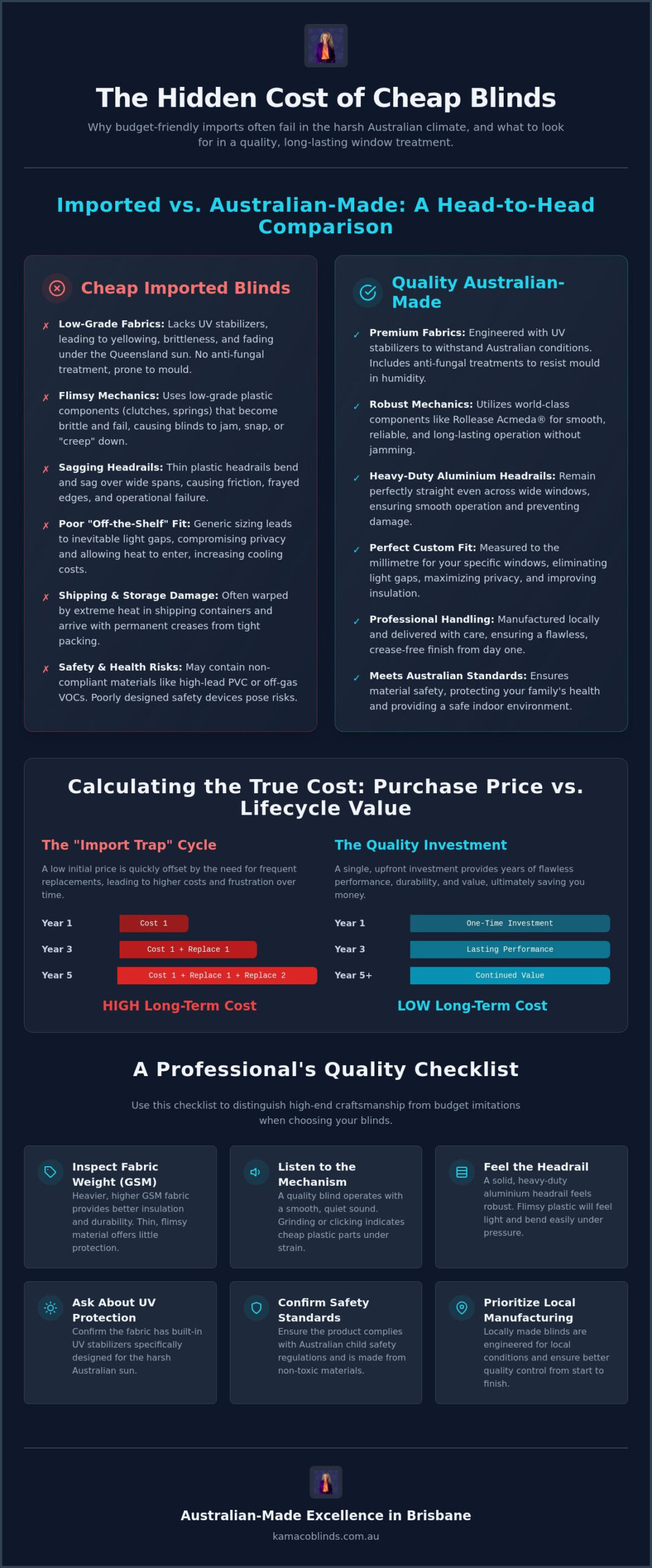
The allure of a “blind-in-a-box” solution from a big-box retailer is understandable when you’re looking for a quick home refresh. However, these mass-produced items are often designed for global markets with much milder climates than our own. When you’re focused on avoiding cheap imported blinds issues, the first realization is that “standard” doesn’t mean “suitable.” Custom-engineered solutions are measured to the millimetre, whereas off-the-shelf imports rely on generic sizing that inevitably leaves light gaps. These gaps don’t just ruin your privacy; they act as thermal bridges that allow Brisbane’s summer heat to pour into your living space, forcing your air conditioning to work significantly harder.
Beyond the fit, there’s a significant concern regarding material safety and compliance. Many budget imports are manufactured in regions with laxer environmental regulations, which can lead to the use of non-compliant materials. This might include high lead content in PVC components or the off-gassing of Volatile Organic Compounds (VOCs) that linger in your home long after installation. While there are different kinds of window blinds available on the market, only those built to strict Australian standards ensure your indoor air quality remains safe for your family. Investing in local quality means you aren’t just buying a product; you’re securing a healthier domestic environment.
The Reality of Mass-Produced Fabrics
The Queensland sun is relentless. Low-grade polyester used in budget imports often lacks the necessary UV stabilisers to survive a single season without becoming brittle. You’ll likely notice the fabric begins to yellow or fade unevenly where the sun hits the most. Brisbane’s humidity also provides a breeding ground for mould. Unlike premium local fabrics, cheap alternatives often skip essential anti-fungal treatments. This results in unsightly black spots that are almost impossible to remove without damaging the thin, low-GSM material, which offers virtually zero thermal protection against the afternoon glare.
Shipping and Storage Issues
The journey from an overseas factory to a local shelf is often traumatic for delicate window treatments. Products spend weeks inside steel shipping containers where temperatures can exceed 60 degrees Celsius. This intense heat often warps plastic components and headrails before you even open the packaging. Because these items are packed tightly for maximum shipping efficiency, they frequently arrive with permanent creases or “bruising” in the fabric. These defects are structural. No amount of hanging will ever make them look as smooth as a locally manufactured Roller Blind or Roman Blind that has been handled with professional care from the assembly line to your window.
Mechanical Failure: Why Cheap Operating Systems Jam
While the fabric choice defines the look of your room, the internal mechanics determine how long you’ll actually enjoy your window treatments. In the quest for avoiding cheap imported blinds issues, homeowners often overlook the “invisible” components like internal springs and clutches. These small parts bear the weight of the entire blind. In budget imports, these are almost exclusively made from low-grade plastic that becomes brittle and loses its grip over time. When a clutch fails, your Roller Blinds will slowly “creep” downwards, or the chain will snap under the tension of a jammed mechanism. It’s a frustrating cycle that leads to frequent, unnecessary replacements.
Brisbane’s architecture often celebrates large sliding doors and expansive glass. A cheap plastic headrail simply cannot support the weight of fabric across these wide spans. Over time, the rail begins to sag in the middle. This doesn’t just look untidy; it creates friction that prevents the blind from rolling straight, eventually leading to frayed edges and permanent damage. We insist on heavy-duty aluminium headrails that remain perfectly straight. This ensures your window treatments operate as smoothly on day one thousand as they did on day one. Selecting high-quality window treatments means you’re investing in the future of your home. You can explore our range of Australian-made roller blinds to see the difference that precision engineering makes.
Safety is another area where budget imports often cut corners. Poorly designed tensioning devices and cord locks can fail, creating significant risks in homes with children or pets. This isn’t just an industry concern; a new federal safety standard highlights the ongoing dangers of non-compliant corded systems. Choosing components from trusted brands like Rollease Acmeda® ensures your home remains both beautiful and safe, adhering to the highest standards of mechanical integrity.
The Importance of Precision Engineering
Precision is the hallmark of a reliable blind. Cheap spring-loaded systems often lose their tension after just a few months, failing to retract fully. High-torque clutches, like those we utilise, provide a firm grip that prevents “creeping” even on heavy blockout fabrics. Furthermore, precision-moulded components significantly reduce the noise and friction associated with daily use. You’ll notice a quiet, effortless glide rather than the clunky, grinding sounds typical of budget hardware.
Motorisation and Automation Failures
The rise of the smart home has led to an influx of generic motors found in imported motorised blinds. These off-brand systems often suffer from a short lifespan and poor battery performance, leaving you with a window treatment that’s stuck in one position. Finding replacement parts for these generic systems is nearly impossible. For a truly reliable experience, we recommend Automate™. These motors are designed for seamless smart home integration, offering consistent power and the peace of mind that comes with professional-grade engineering.
Calculating the True Cost: Purchase Price vs. Lifecycle Value
When you compare quotes for window treatments, it’s natural to look at the immediate impact on your bank account. However, focusing only on the sticker price often ignores the hidden “import tax” of frequent mechanical failures. In the context of avoiding cheap imported blinds issues, the most significant saving isn’t found at the point of sale; it’s found in the lifecycle of the product. A budget blind that lasts only three years before the mechanism grinds to a halt isn’t a bargain. It’s the first installment of a decade-long replacement cycle that usually results in you buying the same window treatment three times. High-quality Australian-made solutions are built to remain pristine for fifteen years or more, making them the more economical choice in the long run.
There’s also a serious concern regarding accountability and safety. Attempting to claim a warranty on a product purchased from an anonymous international seller is often a futile exercise in frustration. Beyond the financial risk, there is a human one. Many mass-produced items fail to meet rigorous safety standards, potentially posing an unreasonable risk of strangulation due to non-compliant cord designs. Choosing local quality ensures you have a partner who is accountable for both the performance and the safety of your home. This commitment to engineering excellence also reduces the environmental burden of disposing of broken, non-recyclable window treatments every few years.
The Thermal Performance Gap
A poorly fitting blind is essentially a thermal leak. Even a high-quality fabric can’t perform its job if there are significant gaps at the edges. Custom-fit Roller Blinds are engineered to create a functional seal that dramatically reduces heat transfer. Cheap materials often lack the specific “Shade Factor” required for Brisbane’s west-facing windows. This results in “light bleed” that doesn’t just disturb your sleep; it forces your air conditioning to work harder, leading to higher energy bills every summer month.
Maintenance and Repairability
Imported blinds are typically designed as disposable items. If a single plastic clip breaks or a spring loses tension, the entire unit often becomes landfill because spare parts aren’t available. In contrast, locally manufactured hardware is designed for longevity and repairability. Our local supply chains mean we can provide quick repairs or even a simple fabric reskin if you decide to update your interior design. This approach reduces waste and ensures your initial investment continues to provide value for decades rather than just a few seasons.
A Quality Checklist: How to Spot Superior Blinds
Distinguishing between a high-end window treatment and a budget imitation requires a keen eye for detail. While a photo online might look impressive, the physical reality often tells a different story. When you’re focused on avoiding cheap imported blinds issues, you need to look past the surface colour and examine the engineering beneath. Quality isn’t just an aesthetic choice; it’s a functional requirement for the Brisbane climate. Understanding what to look for will save you from the frustration of a failed installation and the cost of an early replacement.
- Examine the fabric density: Ask for the GSM (grams per square metre) weight. A higher density indicates a superior weave that provides better thermal protection and resists the “pinhole” light leaks common in thinner imports.
- Verify UV resistance: Look for official certificates. Without these, the fabric is likely to become brittle and discoloured within a few years of exposure to Queensland’s intense sun.
- Listen to the mechanism: A premium blind should operate with a quiet, consistent glide. If you hear a clunky, grinding sound, you’re likely dealing with low-grade plastic gears that won’t stand up to daily use.
- Check the tube material: Superior blinds use thick-walled aluminium tubes that prevent sagging across wide windows. Budget options often use thin steel or plastic that warps over time.
What to Ask Your Blind Supplier
Being an informed consumer means asking the right questions before you commit. Ask your supplier if the blinds are manufactured locally in Brisbane or imported as pre-made units. You should also inquire about the specific brands used for internal hardware and motorisation. A reputable provider will be proud to mention world-class components like Rollease Acmeda. Finally, ensure the warranty is backed by an Australian-owned company with a local presence so you aren’t left stranded if you need support. This proactive approach is the most effective way of avoiding cheap imported blinds issues before they impact your home’s comfort.
Signs of High-End Craftsmanship
Meticulous attention to detail is what separates a custom-engineered blind from a mass-produced one. Look for clean, heat-sealed edges on the fabric. This technique prevents the fraying that typically plagues cheap, cold-cut imports. A weighted bottom rail is another hallmark of quality; it ensures the fabric remains taut and prevents unsightly flapping when a breeze enters the room. For a truly sophisticated finish, consider custom-matched pelmets or cassette systems that hide the roll and provide a seamless transition to your interior architecture.
If you’re ready to experience the difference that precision manufacturing makes, you can view our full range of Australian-made window treatments to find the perfect fit for your home.
The Kamaco Advantage: Australian-Made Excellence in Brisbane
Choosing the right window treatments involves more than just selecting a fabric; it’s about choosing a partner invested in the longevity of your home. At Kamaco Blinds, our local manufacturing facility in Brisbane allows us to maintain absolute control over every stage of production. This proximity is the most effective strategy for avoiding cheap imported blinds issues, as it ensures every product is engineered to the exact millimetre of your specifications. Unlike generic imports that rely on guesswork, our custom approach guarantees a seamless fit that eliminates light gaps and provides the thermal insulation your living space requires to remain comfortable throughout the year.
Our commitment to excellence is reflected in our choice of internal components. We exclusively utilise world-class hardware from Rollease Acmeda®, ensuring that the internal mechanics of our Roller Blinds and Roman Blinds are as sophisticated as their exterior design. By pairing these precision-engineered systems with high-quality fabrics, we create window treatments that operate with a quiet, effortless glide. This focus on premium engineering addresses the common mechanical failures associated with budget alternatives, providing you with a reliable solution that stands the test of time in the demanding Queensland environment.
The Australian climate presents unique challenges that off-the-shelf products simply aren’t designed to handle. Our entire range, including the industry-leading Zipscreen™ and our versatile internal collections, is built specifically for local conditions. Whether it’s resisting the intense UV radiation of a Brisbane summer or managing the high humidity of the coastal regions, our products are tested to ensure they won’t warp, fade, or become brittle. This dedication to regional suitability ensures your investment remains a beautiful and functional part of your home for decades.
Supporting Local Industry and Accountability
There is a profound sense of security that comes with supporting Australian-owned manufacturing. When you choose a locally produced blind, you’re benefiting from a transparent supply chain and a team that is directly accountable for the quality of the finished product. Kamaco Blinds supports our network of Brisbane retailers with deep technical expertise and professional cut-skin services, ensuring they have the tools to deliver a perfect result for your home. Our focus remains firmly on long-term reliability rather than the fleeting appeal of bargain pricing, giving you peace of mind that your window treatments are backed by local experts.
Transforming Your Space with Confidence
The ultimate reward of choosing custom-made window treatments is the aesthetic transformation of your domestic environment. When blinds fit perfectly and operate flawlessly, they elevate the entire room, creating a sense of order and elegance that mass-produced items cannot replicate. By choosing durable, long-lasting products, you’re also making a sustainable choice that reduces your domestic carbon footprint and avoids the waste of the “replacement cycle” discussed previously. To begin your journey toward a more beautiful and energy-efficient home, we encourage you to find a Kamaco Blinds retailer near you who can guide you through our extensive range of Australian-made solutions.
Securing the Future of Your Living Space
Selecting window treatments for your home shouldn’t feel like a gamble. By prioritising precision engineering and regional suitability, you ensure your living areas remain a sanctuary regardless of the outdoor temperature. Avoiding cheap imported blinds issues is ultimately about choosing products that respect both the architecture of your space and the demands of the Queensland sun. You now have the tools to distinguish between disposable retail items and custom-crafted solutions that offer genuine thermal protection and mechanical longevity.
Our commitment to expert Brisbane manufacturing since inception means your window treatments are designed to endure. We take pride in being Australian-made and owned, utilising world-class Rollease Acmeda® components to provide a level of performance that budget imports simply cannot replicate. You deserve the confidence that comes with investing in craftsmanship that truly lasts. Partner with Brisbane’s leading blinds manufacturer for quality you can trust. We look forward to helping you transform your home with elegance and reliability.
Frequently Asked Questions
Why do cheap blinds turn yellow or fade so quickly?
Budget blinds fade because they lack the high-quality UV stabilisers found in premium fabrics. Most budget imports are manufactured for milder international climates where the solar intensity is significantly lower than in Brisbane. Without these chemical protectors, the fabric fibres break down under intense sunlight. This leads to brittle textures and unsightly yellowing within just one or two seasons of exposure.
Can I repair a broken imported blind I bought online?
Repairing a budget imported blind is often impossible because they are designed as disposable units with no available spare parts. The internal components are frequently unique to that specific overseas factory, meaning standard local hardware won’t fit. If a plastic clutch or internal spring fails, you’ll likely need to replace the entire window treatment, which is why avoiding cheap imported blinds issues is essential for long-term home maintenance.
Are Australian-made blinds actually more energy-efficient?
Australian-made blinds offer superior energy efficiency primarily through their precision, custom-fit design. Unlike standard-sized imports that leave significant light gaps at the edges, custom window treatments create a functional seal over the glass. This reduces heat transfer and lowers your cooling costs. Additionally, locally sourced fabrics often feature higher GSM weights and specialised thermal coatings specifically engineered for the Australian heat.
What is the most common mechanical failure in budget roller blinds?
The most frequent mechanical failure is the breakdown of the internal clutch mechanism, which causes the blind to “creep” or slip downwards on its own. This happens because the budget plastic components can’t sustain the weight of the fabric over time. You may also experience snapped chains or jammed rollers, as the low-grade materials become brittle and lose their structural integrity under the daily stress of operation.
How can I tell if a blind uses high-quality components like Rollease Acmeda?
You can verify the quality of your hardware by asking your supplier for a specification sheet that lists the component brands. Premium systems like Rollease Acmeda often feature subtle branding on the bracket covers or chain winders. Beyond visual checks, you should listen for a quiet, effortless glide during operation. High-quality engineering produces a smooth sound, whereas budget hardware typically creates a clunky, grinding noise.
Is it worth paying more for custom blinds if I am only staying in my home for 2 years?
Even for a short-term stay, quality window treatments add significant resale value and aesthetic appeal to your property. Potential buyers often notice the difference between sagging, ill-fitting imports and sleek, custom-engineered blinds. Choosing a reliable local product also ensures you won’t deal with the frustration of a mechanical failure during your residency. This allows you to enjoy a comfortable, perfectly shaded home without the hassle of early repairs.
What are the safety standards for blinds in Australia?
Australian safety standards are strictly regulated to prevent accidents involving window cords. In Queensland, as of December 16, 2024, professionally installed corded coverings must ensure that a loose cord cannot form a loop of 220mm or longer at or less than 1,600mm above floor level. Quality manufacturers adhere to these regulations by providing essential tensioning devices and clear safety labelling. This ensures your home remains a safe environment for your family.
How does the Brisbane humidity affect cheap vs. quality blinds?
Brisbane’s high humidity can cause mould and mildew to grow rapidly on untreated fabrics. Cheap imported blinds often skip the anti-fungal coatings required to protect against moisture-related damage. In contrast, premium Australian-made fabrics are specifically treated to resist fungal growth. This keeps your window treatments looking fresh and prevents the dark, unhygienic spots that can ruin the appearance of budget materials in a humid coastal climate.