There isn’t one set price for wholesale outdoor blinds in Brisbane. The product system, custom requirements and order details all affect the quote. For a useful comparison, start with the needs of each space and the products required, rather than relying on a single headline figure.
It’s reasonable to want a clear budget before choosing blinds, especially when you’re sourcing for a business or a larger project. The right specification can shape both the look of an outdoor area and how it handles Brisbane’s changing weather, so price is only one part of the decision.
This guide covers wholesale outdoor blind options in Brisbane, how to prepare a project specification and what to consider when selecting products. It also explains how Kamaco Blinds supports retailers with custom-made blinds, motorisation and box systems, and its Cut Skin service.
Key Takeaways
- Understand which project details shape an outdoor blind quote, from opening dimensions and fabric choices to order quantity.
- Weigh manual and motorised operation against how often the blinds will be used and the needs of the space.
- Explore how exposure to wind and weather can guide the choice of blind system and fabric.
- See how wholesale sourcing can suit Australian businesses planning orders across multiple spaces or projects.
- Compare outdoor blind and awning options to find a practical fit for the setting and the intended use.
How much are outdoor blinds in Brisbane?
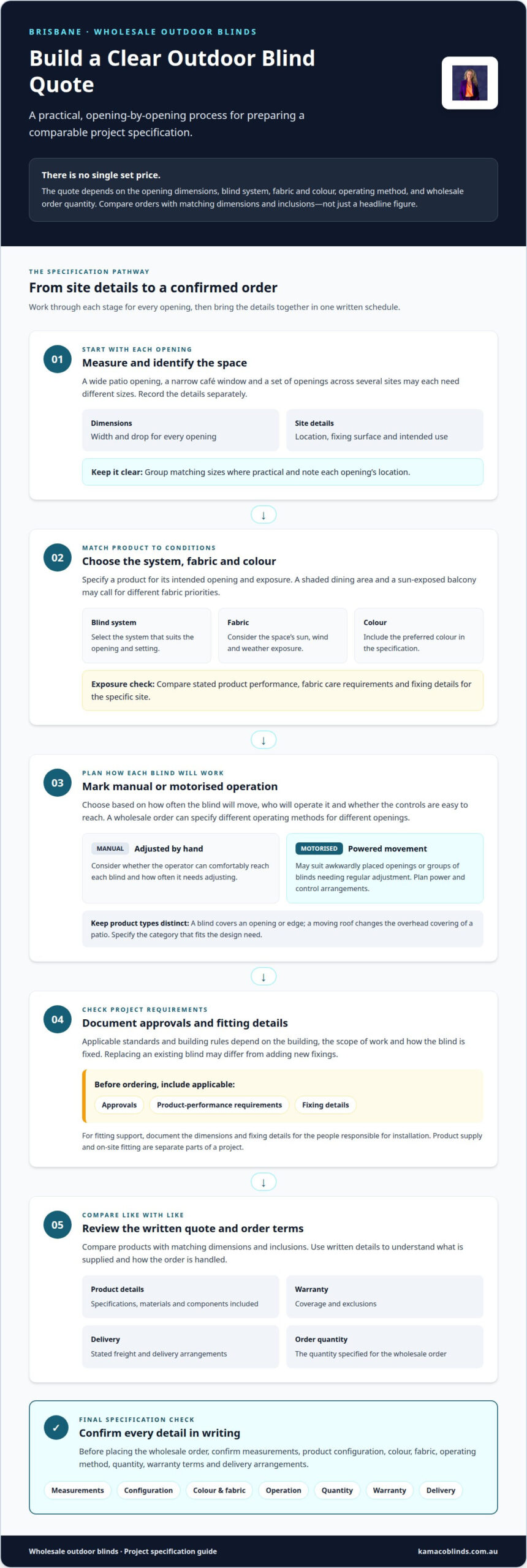
There’s no single price for custom outdoor blinds in Brisbane. The cost depends on each opening’s width and drop, the chosen blind system, fabric and colour, operating method, and wholesale order quantity. A quote request sets out the price for the specified order, so compare products with matching dimensions and inclusions rather than relying on a headline figure.
For custom work, accurate measurements help define the product specification. A wide patio opening differs from a narrow café window, and a series of spaces may need several blind sizes. Record each opening’s width and drop, fixing surface and intended use. Group matching sizes where practical to make the order schedule clear.
Quality, warranty and delivery can be compared through written details, not price alone. Review each wholesaler’s product specifications, warranty coverage and exclusions, plus the stated freight and delivery arrangements for the order. A clear comparison shows what materials and components are included, what the warranty applies to, and how delivery is handled.
Customisation can include colour, size and fabric selection, with the product chosen to suit the space and its exposure. For example, a shaded outdoor dining area and a sun-exposed balcony may call for different fabric priorities. Custom-built shade products should also be specified for their intended opening, so the finished blind complements the building rather than appearing as an afterthought.
For a project in Brisbane South, prepare a separate measurement schedule for each home, business or site. Include the opening location, width, drop, fixing surface, preferred colour and required operating method. This makes it easier to distinguish a custom-made blind for a single patio from a coordinated order across several spaces.
Australian standards and building rules depend on the building, the work’s scope and how the blind is fixed; replacing an existing blind may differ from adding new fixings. Include applicable approval and product-performance requirements in the project specification before ordering, particularly where the work forms part of a larger building project.
Before placing a wholesale order, confirm the measurements, product configuration, colour, fabric, operating method, quantity, warranty terms and delivery arrangements in the written specification. For fitting support, make sure the dimensions and fixing details are documented for the people responsible for installation; product supply and on-site fitting are separate parts of a project.
- Dimensions: Record the width, drop and fixing surface for each opening.
- Selection: Match colour, fabric and operation to the space and its exposure.
- Order terms: Compare specifications, warranty scope and delivery details.
- Project requirements: Include applicable approvals and performance needs before ordering.
Manual and motorised operation
Choose manual or motorised operation by considering how often each blind will be used, who will operate it and how accessible the controls need to be. A single blind beside a small courtyard may be straightforward to operate by hand. Across a café frontage, motorisation may be worth considering for the project. The opening, intended use and operator all matter.
With manual operation, the user adjusts the blind by hand. For a home with one sheltered patio opening, this may suit occasional changes throughout the day. In a business, consider whether staff can comfortably reach each blind and how often it needs adjusting as customers move between indoor and outdoor spaces.
Motorised blinds use powered movement instead of relying on someone to operate each blind by hand. This can be useful for an awkwardly placed opening or a group of blinds that needs regular adjustment. Before choosing this option, define which blinds require motorisation, how they will be operated, and where the relevant power and control arrangements belong in the project plan. These details affect the product specification and fitting work.
A motorised patio roofing system is different from a motorised blind. A blind covers an opening or edge, while a moving roof changes the overhead covering of a patio. They address different design needs. For example, a restaurant with a fixed overhead structure and exposed sides may consider blinds, while a project focused on adjustable overhead cover involves a roofing system. Match the product category to the space.
For a wholesale order, list each opening and its operating method before finalising the specification. A simple schedule can include:
- Location: Note whether the blind serves a patio, balcony, shopfront or dining area.
- Use: Record how often it will move and who will operate it.
- Access: Identify whether the control position is easy to reach.
- Operation: Mark each unit as manual or motorised.
This step distinguishes a one-off manual blind from a larger order with mixed operating methods. It also gives the project team a clear basis for coordinating product selection and fitting details, without assuming every opening needs the same solution.
If you’re comparing configurations, explore the blind options for different spaces alongside your operating requirements. A considered match between opening, use and control method keeps the specification practical and visually consistent.
Wind resistance and weather durability
Wind and rain affect external blinds differently, so assess each opening’s exposure before choosing a system. Compare the product’s stated performance, fabric care requirements and fixing details for the specific site.
Wind Resistance
A blind’s suitability depends on its product specification, fixing method and the conditions at the site. A sheltered courtyard differs from an open balcony or uncovered café frontage. Review the product information and match the chosen system to the intended location rather than assuming one product suits every opening.
Consider the fixing surface and opening when planning an installed blind. For example, a broad external blind fitted to a masonry wall needs fixing details suited to that wall and opening. Share the dimensions and site context with the retailer to help specify an appropriate product configuration.
Wind-resistant roofing is a separate consideration from blinds. A roof spans overhead, while a blind covers an opening or edge, so they serve different purposes. If a project includes both, document each product separately, including its location, support structure and intended use. Do not assume a blind’s product information also applies to an overhead roof.
Water Resistance and Care
Water resistance describes how a fabric or system handles moisture. It doesn’t automatically mean the complete installation is waterproof. Rain can reach an outdoor blind through its edges, joins or surrounding structure. For a covered patio, identify whether the priority is limiting splash, managing light rain or providing an overhead waterproof covering, then specify the required outcome for each space.
Follow the care instructions provided for the product. Remove surface dirt gently and allow the blind to dry as directed before retracting or storing it. For example, a café can include a visual check for dirt, moisture and fabric damage when staff prepare the outdoor area. Avoid assuming harsh cleaners suit every fabric or finish.
Durability also depends on how a product is used and cared for. A blind left exposed to changing conditions has different demands from one retracted when not needed. Include expected use and care in the project specification. This helps clarify which product information is relevant to the space.
For a wholesale order, record the conditions and care needs for each opening. Separate sheltered areas from exposed ones, note whether water protection is a priority, and include the fixing surface. Then review the product information and care guidance for each proposed system. This helps distinguish terms such as “durable”, “wind-resistant” and “waterproof” rather than treating them as interchangeable.
Wholesale fabric awnings and outdoor blinds
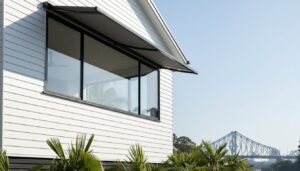
Fabric awnings and outdoor blinds suit different layouts, so begin with the area each product needs to cover. A fabric awning projects shade from a building, while an outdoor blind screens an opening or exposed edge. For example, a café may specify an awning over its footpath seating and blinds along the sides of its patio. List each as a separate product in the order schedule.
Fabric selection affects the appearance and intended use of each space. A retailer might build a coordinated specification around a shared colour palette, then select different products for shopfronts, balconies or covered entertaining areas. Record the colour, fabric description, dimensions and product type for every line. This keeps a multi-site order organised without assuming that one fabric or system suits every opening.
Folding arm awnings are one category to compare when a project needs an awning that extends from a wall. Brand and model names matter because product labels alone don’t describe the full specification. Compare the written details for each candidate, including operating method, available dimensions, fabric choices, fixing requirements and product documentation. Don’t treat two models as equivalent just because both are described as folding arm awnings.
For a wholesale comparison, identify the exact product against each quoted line. Then compare equivalent configurations rather than mixing products with different specifications. A retailer preparing a proposal for two properties, for instance, can note whether both sites need the same awning or different products because their openings differ.
Wholesale outdoor blinds and awnings can also be ordered together, but the schedule should keep their categories distinct. Use one line for each product, and record its location, size, colour, fabric and operating method. Add the quantity and delivery destination for each group. This makes it easier to review the order, allocate products to the right project and identify differences before processing.
- Separate product types: Distinguish awnings from blinds in the order schedule.
- Identify models: Record the brand and model for each folding arm awning.
- Match specifications: Compare like-for-like dimensions, fabrics and operating methods.
- Group by site: Label products by property or project location.
A clear product schedule gives retailers a practical basis for discussing wholesale supply with Australian manufacturers and wholesalers. It also helps maintain a consistent design across several spaces while allowing each opening to have a specification suited to its use. Keep the product names and model details attached to each line, especially when an order includes both fabric awnings and outdoor blinds.
Wholesale outdoor blinds for Australian businesses
Trade buyers can source through manufacturers and wholesalers that supply businesses, with order terms set by each supplier. A clear project schedule helps align product selection, quantities and delivery across Brisbane sites.
Minimum Order Quantities
Wholesale requirements depend on the supplier and the product order. When planning an order, clarify the products and quantities needed and provide a clear schedule for the quote. Keep different product types, sizes and custom configurations distinct rather than assuming one requirement applies to all.
For example, a retailer ordering blinds for several shopfronts can list each opening, product and finish separately. That breakdown shows whether the order meets the relevant minimums without combining unlike products. Include any repeat-order plans too, since consistent product details make later replenishment easier to organise.
Trade Accounts and Suppliers
Brisbane trade customers can approach Australian blind manufacturers and wholesalers that supply business accounts. Account terms are supplier-specific, so establish how trade pricing, order processing, payment and delivery are handled before planning a project. Requirements may differ between a one-off trade purchase and ongoing account arrangements.
Prepare the business name, trading details, project locations and product schedule for an account or trade enquiry. These details help the supplier understand whether the request covers a single site or multiple jobs. Keep the question practical: what account setup is required, which products can be ordered, and how delivery is arranged for the relevant locations?
For retailers and trade professionals, wholesale sourcing can support a consistent offer across residential and commercial projects. A business might specify matching blind colours for several properties while allowing dimensions and configurations to vary by opening. Keep each site’s requirements distinct, then consolidate the order once product descriptions and quantities are clear.
Australian-made supply can also be part of a business’s product story. Retailers can describe origin accurately using the information supplied with the products, rather than making broad claims about local manufacture. This gives customers a useful point of comparison while keeping product descriptions precise and grounded.
Before submitting an order, organise the schedule by site and include product type, dimensions, colour, fabric, quantity and delivery destination. Record agreed account terms and any minimum quantities alongside the relevant product lines. This creates a practical reference for quoting, fulfilment and future repeat orders, especially when several projects are moving at once.
For a trade supply conversation, discuss your wholesale blind requirements with the team and outline the products and project locations involved.
Kamaco Blinds
Kamaco Blinds manufactures and wholesales custom-made blinds and awnings to retailers, supporting Brisbane projects with trade supply. Its range includes outdoor products such as Zipscreen™ and Veue drop awnings, alongside indoor blinds, so retailers can consider options for different spaces through an Australian-made and owned company.
For a project, prepare the opening details, intended use and preferred product types. This gives the wholesale conversation a clear starting point, whether you’re sourcing for one site or coordinating several orders. Kamaco Blinds products use Rollease Acmeda® components for smooth, hassle-free operation.
If you’re planning a wholesale order or discussing product options for a business project, contact Kamaco Blinds to start the conversation.
Plan your next outdoor blind order
A well-planned wholesale order starts with the project: the spaces, products and details your business needs to coordinate. For wholesale outdoor blinds in Brisbane, use those priorities to shape a clear discussion about product selection and supply.
Kamaco Blinds’ range includes Zipscreen™, Veue drop awnings and Roller blinds. These options help retailers and trade buyers consider different requirements across outdoor and indoor spaces, with product selection shaped by each project’s design and use.
Bring your project requirements into the conversation, including the intended locations and product types. Contact Kamaco Blinds to discuss wholesale blind options for your business. A clear starting point can help you take the next step with confidence.
Frequently Asked Questions
What types of outdoor blinds are available wholesale in Brisbane?
Brisbane retailers sourcing wholesale outdoor blinds can consider Zipscreen™ and Veue drop awnings alongside indoor blind categories for broader projects. Kamaco Blinds manufactures and wholesales custom-made blinds and awnings through retailers. For a trade enquiry, identify whether the project needs external screening, an awning or both, then request product details for the relevant openings and intended use.
What are the wholesale prices for outdoor blinds in Brisbane?
Wholesale prices are quoted for the specific order rather than set as one standard amount. The product system, opening dimensions, fabric and colour choices, operating method and order quantity shape the quotation. Retailers seeking wholesale outdoor blinds in Brisbane can provide those project details when requesting a quote. A clear schedule of products and quantities helps the retailer prepare a quote that reflects the actual specification.
Which outdoor blind fabrics and systems suit Brisbane’s climate?
Choose a product by matching its information and care guidance to each Brisbane site’s exposure and intended use. A sheltered courtyard and an open shopfront have different conditions, so consider the product information for the specific installation. Zipscreen™ provides privacy, year-round protection, and protection from the elements and insects.
Do Brisbane wholesale suppliers offer custom sizing and made-to-measure blinds?
Yes, Kamaco Blinds manufactures custom-made blinds for wholesale supply to retailers. For a made-to-measure order, provide the retailer with the dimensions and location for each opening, along with the product type and preferred configuration. For example, a project with differently sized shopfront windows needs each opening listed separately, so the quote and order schedule reflect the required custom sizing.